


What is a Current Path?

What makes for an optimal current path? Learn how materials, geometry, and contact points minimize energy losses and save space.
23. October 2026

What is a Current Path?

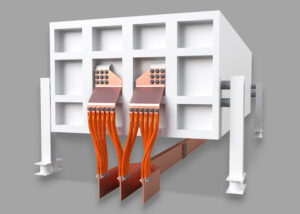
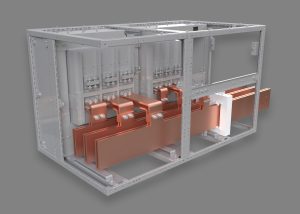
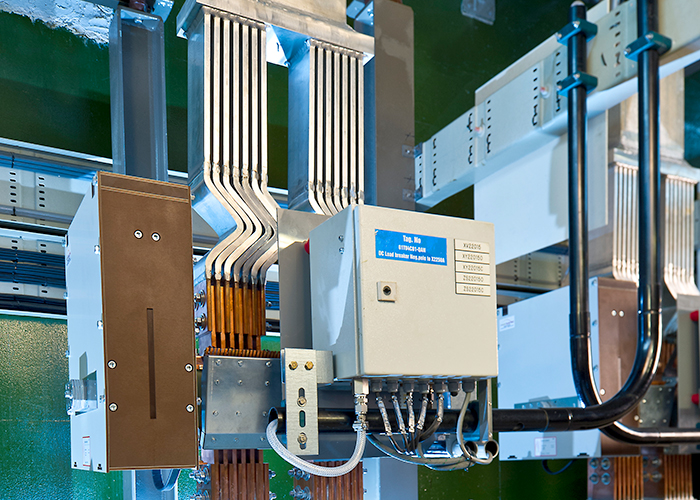
A current path is the uninterrupted physical route that an electric current takes from its source through all the conductors, contacts and components to the load, and then back again. In high-current technology, this path comprises rigid and flexible busbars, individual busbar connections, terminals and screwed or welded joints. Every detail matters, as every metre of copper or aluminium, every hole and every contact surface determines how much energy is lost as heat, how much installation space the system requires and how long it will operate reliably for. A current path is only as strong as its weakest link. This is precisely why it is important to plan it from the outset as an integrated, well-thought-out system, rather than merely as a collection of individual off-the-shelf parts.

A Complete System

Carries High-Currents safely

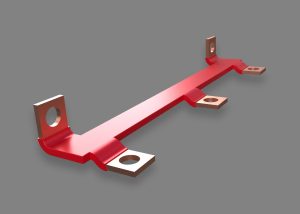
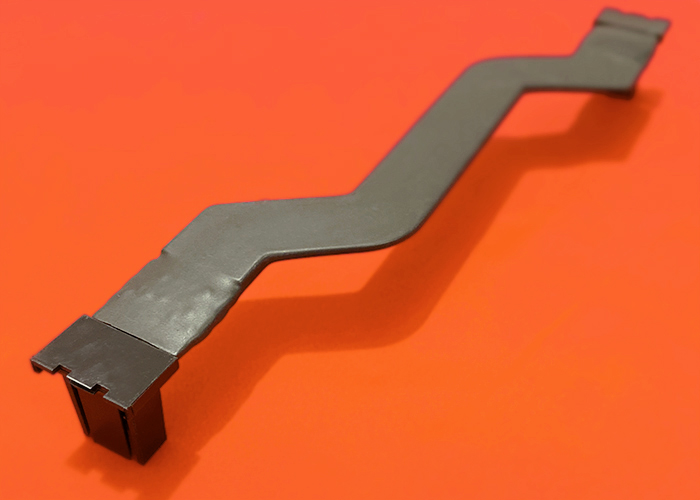
EMS highly flexible busbars

How to recognize a good Current Path

An optimally designed current path carries high currents safely and with minimal losses throughout its entire service life, while requiring minimal space.

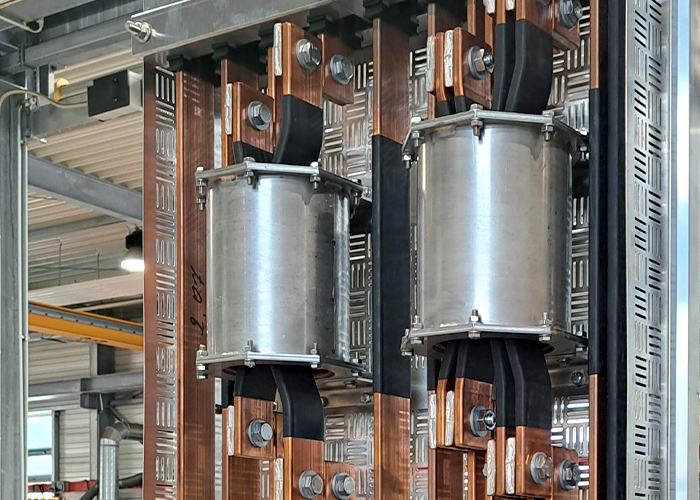
This is achieved through the proper interplay of four key factors. Firstly, material and resistance play a leading role. While copper offers the highest conductivity in a compact space, aluminium saves on weight and material costs. The focus is always on minimising total resistance, since every milliohm is directly converted into unwanted heat. Secondly, the cross-section and geometry determine the current-carrying capacity. Flat, wide profiles dissipate heat particularly efficiently and reduce the skin effect in alternating current. 

Current Path Connections

Special attention must be paid to the connection points. Whether they are screws, clamps or welds, poor contacts increase contact resistance and create dangerous hotspots. Finally, mechanical and thermal influences must also be considered.

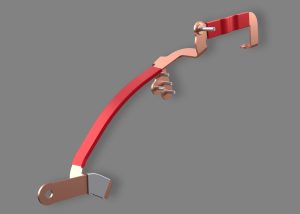
Vibrations, short-circuit forces and thermal expansion continuously stress the material, but flexible bars compensate for these movements. Ignoring these factors can result in high thermal losses, unplanned system failures and unnecessarily large space requirements.

EMS VisionElectric
Holistic system solutions
Customized Current Path
Engineering Service
Designed by Experts

Requirements by market

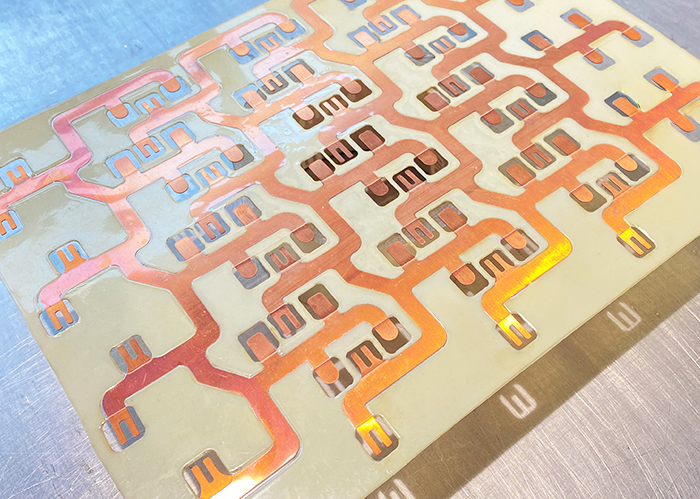
EMS Busbar Assemble Units

Requirements by application

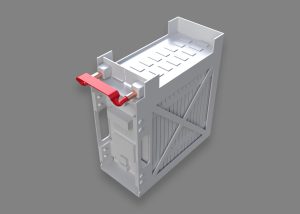
In e-mobility and automotive engineering, for instance, the path must be lightweight, compact and resistant to vibration. Laminated busbars, for example, can be used directly as battery connectors. Together with flexible bars, they connect cell modules, inverters and charging ports in high-voltage architectures. Additionally, integrated EMC shielding is becoming increasingly important to prevent interference with vehicle electronics. In energy infrastructure and BESS storage systems, the main focus is on ensuring they run smoothly and without interruption. Bars and distribution systems in switchgear, transformers and battery storage systems often operate continuously for decades, so saving even a small amount of power directly impacts the system’s lifetime cost. In data centres and AI clusters, ever-increasing power densities per rack necessitate highly compact solutions. 

Power Distribution & Technology

Busbars for main distribution panels and UPS systems must be thermally designed to remain cool, even in densely packed racks, without placing an additional workload on the data centre’s cooling system. In automation and mechanical engineering, flexibility and easy integration are essential. Robotics and drive systems require vibration-resistant solutions, and insulated, flexible busbars often replace complex cable harnesses, drastically reducing installation time. In aerospace and defence technology, the top priorities are maximum reliability with minimum weight, the tightest tolerances and corrosion-resistant coatings. In the process industry and electrolysis, systems must be able to handle heat, chemicals and extreme currents. Robust, high-current connections such as our IndustryBars ensure uninterrupted operation in these conditions, even in explosion-protected atmospheres.

Zespoły systemu elektrolizy EMS
Shape
Built to power what's next

Our Global Network

As part of the Pantheon Electric global platform network, we supply the power generation market segment with heavy-duty, custom-designed system solutions for demanding industrial environments.

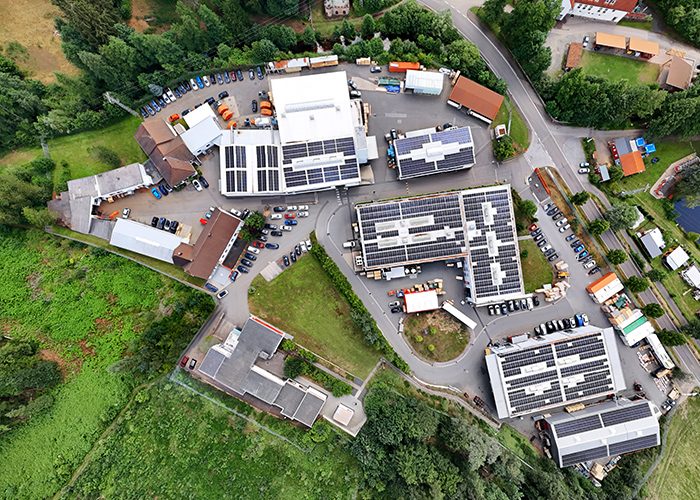
EMS Schwanenmühle Gelände

A One-Stop Solution for your Current Path

At EMS Elektro Metall Schwanenmühle, you can source your entire current path from a single provider, from the initial concept to a ready-to-install assembly. This means fewer points of contact, less coordination effort, and a complete system in which all elements work together seamlessly. Our project manager will provide reliable support throughout every phase of your project. We start with a thorough consultation to assess the rated currents, installation space, environmental conditions, and applicable standards. During the planning phase, we handle the sizing, cross-sectional design, and thermal simulation of the entire current path. Next, we design custom components precisely and manufacture them with precision, including press-welded copper and aluminum parts for minimal contact resistance. Finally, we lighten your production team’s load by pre-assembling complete assemblies and delivering them directly to your site.

Frequently Asked Questions about Current Path

A busbar is a component. The current path is the entire route taken by the current, including all bars, connectors, contact points, and junctions.

Contact resistance arises at screw, clamp, and weld joints. If the contact is poor, the area heats up, ages more quickly, and, in the worst case, can fail.

Copper conducts better and allows for smaller cross-sections. Aluminum is lighter and less expensive, but requires a larger cross-section.

Whenever vibrations, thermal expansion, or tolerances need to be compensated for. For example, in machines, vehicles, battery storage systems, or at transformer connections.

EMS-VisionBar_Power-Alu-Busbar-Systems

Good power distribution starts with an EMS Current Path

To conduct high currents safely and efficiently, you must consider the entire current path. Focusing on individual components is not enough. The key to success lies in achieving the perfect balance between material, geometry, transitions and mechanics.

What challenges are you facing in your current project?

Please contact our technical sales representatives.

Shape
Shape
System solutions for your market

Discover Possible Uses

We have years of experience in engineering customized solutions to meet your requirements. In addition, we have the necessary “workstation” on-site for the production of the relevant components.

EMS Elektro Metall Schwanenmühle GmbH
Fax

+49 6307 9116 691

Do you have any questions or need a quote?
Then get in touch with us:

Ansprechpartner / contact person

Mit dem Absenden des Formulars werden Ihre Angaben zur Bearbeitung Ihrer Anfrage verarbeitet. Weitere Informationen finden Sie in unserer Datenschutzerklärung. / By submitting this form, your details will be processed to handle your request. Further information can be found in our Privacy Policy.

=